
Your mental health directly impacts how fast you age at the cellular level. Chronic stress can shorten your telomeres—the protective caps on your DNA—by the equivalent of 9-17 years of aging, while mind-body practices like Tai Chi and meditation actually grow your brain and reverse typical age-related decline. These exercises reduce inflammation, protect memory systems, and strengthen the neural networks that control focus and emotional regulation. The strategies below reveal how to harness this connection for healthier aging.
Main Points
- Mind-body exercises like Tai Chi and Qigong improve memory, processing speed, and attention while protecting against age-related cognitive decline.
- Chronic psychological stress accelerates cellular aging by shortening telomeres, potentially adding 9-17 years of biological aging to high-stress individuals.
- Regular aerobic exercise increases hippocampus volume by over 2% annually, reversing typical brain shrinkage and enhancing mental processing abilities.
- Mindfulness practices reduce stress-related brain activity and strengthen cognitive control networks, slowing age-related brain tissue loss and improving emotional regulation.
- Physical activities like walking and group exercises alleviate depression, build mental resilience, and combat social isolation in older adults.
Why Mind-Body Exercises Slow Biological Aging
While conventional wisdom once suggested cognitive decline was inevitable, emerging research reveals that mind-body exercises actively reshape your brain’s structure and function.
Aerobic training increases your hippocampus volume by over 2% annually, reversing the typical 1.4% decline. These neuroplasticity benefits extend beyond structural changes—Qigong practitioners demonstrate improved processing speed and sustained attention within just 12 weeks.
Regular aerobic exercise literally grows your brain, expanding the hippocampus while enhancing mental processing speed and focus in just weeks.
The exercise synergy between physical movement and mindfulness produces remarkable anti-aging effects. You’ll experience reduced inflammation markers like IL-6, while exercise activates telomerase to add up to 189 base pairs to your telomeres.
Running 75 minutes weekly effectively reverses 12 years of biological aging. Mind-body practices modulate your default mode, cognitive control, and sensory-motor networks, counteracting stress-induced cellular damage that accelerates aging. Regular exercise helps regulate free radicals by reducing oxidative stress throughout your body.
Tai Chi, Qigong, and Meditation for Memory Protection
Among the various mind-body practices available, Tai Chi and Qigong stand out for their specific protective effects on memory systems.
When you practice tai chi, benefits extend to your hippocampus, the brain region governing memory and learning, which actually enlarges with regular sessions. You’ll experience improvements in recollection, attention, and executive function when practicing three times weekly for 30-60 minutes.
Qigong practices similarly enhance your cognitive performance through increased grey matter volume and stronger neural connectivity between your prefrontal cortex and emotion-processing regions.
These exercises also reduce your cortisol levels, protecting against stress-induced memory impairment. You’ll need at least 12 weeks of consistent practice to achieve meaningful cognitive benefits, with ideal results appearing after 24 weeks of training. Both practices promote heart health by lowering blood pressure and improving circulation to deliver oxygen to brain cells.
How Chronic Stress Shortens Your Telomeres
Your psychological stress doesn’t just affect your mood—it directly damages the protective caps on your chromosomes called telomeres. When you experience chronic stress, your body generates higher oxidative stress while producing less telomerase activity, the enzyme that repairs telomeres. This combination accelerates telomere shortening and cellular aging in your immune cells.
The effects are substantial. High-stress individuals show telomeres shortened by 550 base pairs—equivalent to 9-17 additional years of aging compared to low-stress people.
The duration matters too: prolonged caregiving and accumulated childhood adversities create the most significant damage. Even a one-year increase in perceived stress can measurably shorten your telomeres. Higher stress hormones and inflammatory markers further accelerate this process, creating an interconnected network that speeds cellular deterioration.
Shortened telomeres don’t just indicate aging—they trigger cellular senescence and inflammation that contribute to the development of chronic diseases like cardiovascular disease.
The Brain Changes That Happen During Mindfulness Practice
When you sit down to meditate, your brain’s communication networks immediately begin shifting in measurable ways. Your Default Mode Network—responsible for mind-wandering—decreases its activity, while your Dorsal Attention Network engages to focus on your breath. These mindfulness effects occur even during brief 10-minute sessions.
Long-term meditation techniques create lasting structural changes. You’ll develop increased connectivity between your attention and control networks, enhancing your ability to stay present.
Your prefrontal cortex, insula, and sensory regions strengthen, improving meta-awareness and emotional regulation. The practice involves training the brain to concentrate on sensory perceptions rather than emotionally charged repetitive thoughts.
Deep brain structures respond too. Your amygdala and hippocampus show altered activity patterns, with changes in beta and gamma waves linked to mood improvement.
Remarkably, regular practice may even slow age-related brain tissue loss, protecting your cognitive function as you age.
How Mind-Body Exercise Reduces Inflammation and Boosts Immunity
How does moving your body dampen inflammation while strengthening your immune defenses? When you exercise, even a 20-minute moderate walk triggers anti-inflammatory responses by reducing TNF-producing cells by 5%.
Your muscles activate regulatory T cells (Tregs) that provide powerful anti-inflammatory effects throughout your body.
Mind-body practices like yoga, meditation, tai chi, and qigong deliver remarkable inflammation reduction by lowering CRP, IL-6, and TNF-α levels.
These interventions simultaneously boost immune-supporting markers, including IL-10 and IFN-γ. After just 7-16 weeks of consistent practice, you’ll see measurable decreases in inflammatory markers.
The immune boosting extends beyond basic defense—these practices enhance your vaccination responses and increase virus-specific immunity.
You don’t need intense workouts; moderate sessions adjusted to your fitness level produce significant anti-inflammatory benefits while building stress resilience. These Tregs also enhance muscle energy utilization, improving your overall endurance and helping your body adapt more effectively to physical demands.
Group Classes, Social Connection, and Cognitive Health
Though you might assume cognitive benefits depend solely on the exercises themselves, joining a group class delivers superior mental health outcomes compared to working out alone.
The social engagement you’ll experience in group settings enhances memory, attention, and executive function beyond what individual training provides. Group cohesion creates stress-free environments where you’ll combat loneliness—a significant risk factor for dementia—while building meaningful connections. Hybrid training models that combine center-based group sessions with home-based exercises offer flexibility while maintaining the cognitive benefits of social interaction.
Why group classes accelerate cognitive enhancement:
- 16-week programs improve global cognition, mental flexibility, and attention in healthy older adults
- Combined physical-cognitive training in groups outperforms solo sessions for those with mild cognitive impairment
- Social interaction reduces loneliness more effectively than individual exercise
- Structured group interventions increase cognition by measurable margins versus self-guided approaches
Managing Depression and Anxiety to Preserve Physical Function
Depression and anxiety don’t just affect your mood—they actively accelerate physical decline and disability in older adults.
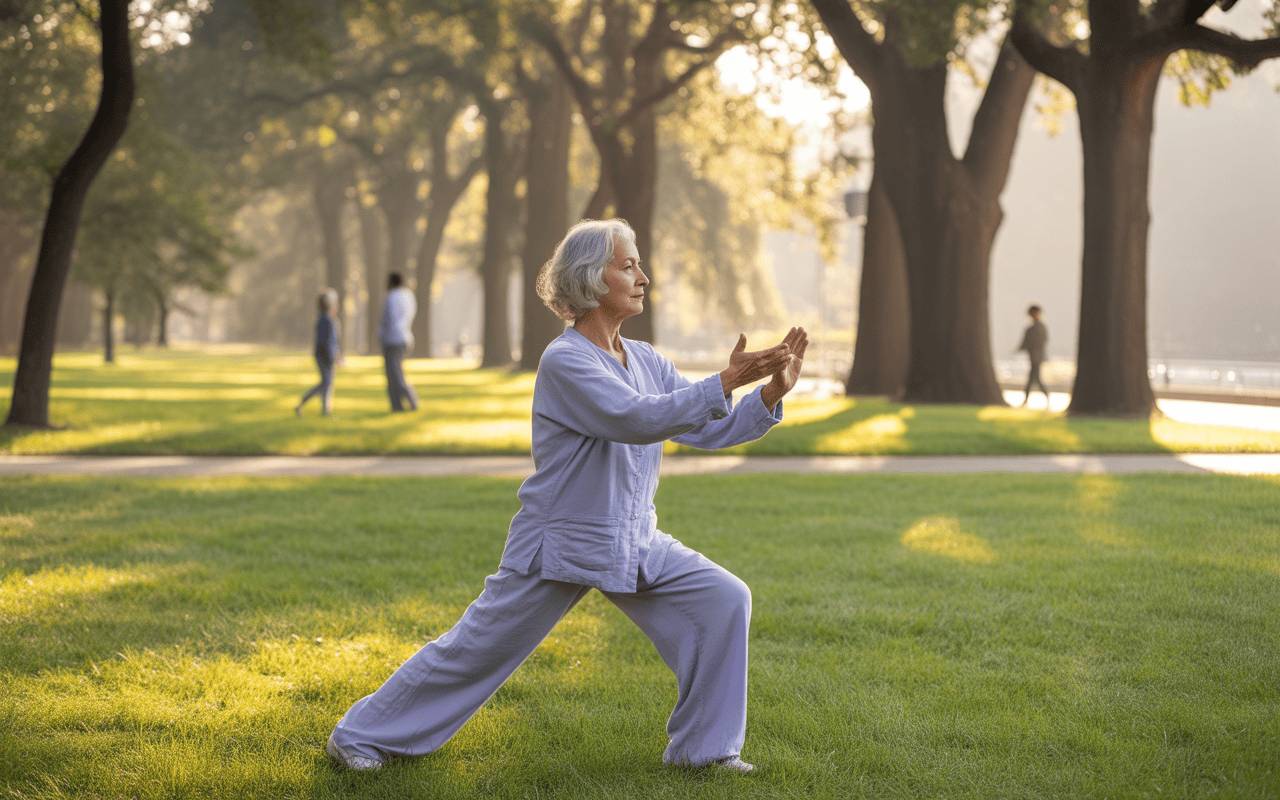
Mind-body exercises like tai chi and yoga offer proven pathways to reduce these symptoms while simultaneously building strength and balance.
Research shows that engaging in leisure activities significantly reduces anxiety levels, which in turn decreases depressive symptoms among older adults.
You’ll discover how stress management techniques can protect your cells at the molecular level and how purposeful movement creates resilience that safeguards both mental and physical function.
Mind-Body Exercises Reduce Symptoms
Mind-body exercises stand out as particularly effective interventions for reducing depression and anxiety symptoms in older adults. These practices combine physical movement with breath control and mindfulness to enhance mental clarity and emotional well-being.
Research shows specific effectiveness rankings:
- Tai Chi ranks first for both anxiety and depression reduction, delivering superior results compared to other mind-body practices.
- Pilates takes second place for alleviating depression symptoms in seniors.
- Qigong ranks second for anxiety relief and fourth for depression management.
- Yoga places third for both conditions while improving liveliness and sleep quality.
You’ll experience significant symptom reduction through these exercises, with studies showing standardized mean differences of -0.89 for depression and -0.77 for anxiety—outperforming conventional aerobic or resistance training. The combination of physical movement with mindfulness creates dual benefits that address both mental and physical health simultaneously, making these exercises particularly valuable for older adults seeking comprehensive wellness solutions.
Stress Management Extends Cellular Longevity
When you experience chronic psychological stress, your cells age faster at the molecular level through a process involving telomeres—the protective caps on your chromosomes. High stress can shorten these telomeres by 550 base pairs, equivalent to 9–17 years of accelerated aging. This happens through oxidative imbalance and reduced cellular repair mechanisms.
However, stress reduction activates longevity pathways that counter these aging mechanisms. Resilience building through emotional regulation helps restore oxidative balance and boost telomerase activity—your body’s cellular repair system. Research shows that cellular stress responses adapt to mitigate damage during exposure to stress, though aging declines these protective mechanisms.
Adaptive strategies like exercise, proper sleep, and nutrition create buffers against stress-induced damage. These interventions activate protective pathways involving autophagy and stress response proteins, improving your healthspan.
Building Resilience Through Movement
As you age, physical movement becomes one of your most powerful tools against depression and anxiety—not just improving your mood, but directly preserving the physical function that maintains your independence.
Walking proves most effective for alleviating depressive symptoms, while triggering endorphin and serotonin release that enhances emotional resilience. You’ll need just 150 minutes of moderate activity weekly—achievable through 10-minute increments of gentle movements. Consistency in exercise fosters physical endurance and mental resilience, combating depression and anxiety.
Your holistic wellness strategy through movement:
- Join group activities like yoga or tai chi for community engagement that combats isolation
- Accumulate daily activity through brisk walking, gardening, or housework to meet energy recommendations
- Experience meditative benefits from repetitive motions that ease tension and boost concentration
- Build confidence through tailored exercises that foster achievement and independence
Building a Sustainable Mind-Body Routine After 50
Creating a mind-body routine that lasts requires more than good intentions—it demands a strategic approach tailored to your body’s changing needs. Start with one-hour sessions three times weekly, incorporating practices like tai chi, yoga, or qigong that combine mindfulness with physical exertion.
These sustainable routines deliver measurable results: improved processing speed, increased hippocampal volume, and reduced inflammation.
Make physical adaptations by choosing low-impact options that match your current fitness level. Chair yoga offers flexibility training without joint stress, while tai chi builds balance through fluid movements. Research shows that mind-body training proves 81% more effective at reducing frailty than aerobic or strength training alone.
Combine your routine with enjoyable activities—practice walking meditation during nature photography, or schedule meditative baths after morning yoga. Set short-term goals focused on what your body can accomplish today, not yesterday’s capabilities.
Adapting Practices for Arthritis, Balance Issues, and Limited Mobility
If you’re living with arthritis, balance issues, or limited mobility, you don’t need to abandon mind-body practices—you need to adapt them.
Modified movements, seated options, and gentle progressions can help you maintain mental wellness without aggravating physical conditions. Given that 38.9-46.9% of older patients with arthritis experience depressive symptoms, adapting these practices becomes even more critical for supporting both physical and mental health.
Your safety comes first, so understanding which adaptations work best for your specific limitations is essential for building a sustainable practice.
Modified Movement for Arthritis
Living with arthritis, balance issues, or limited mobility doesn’t mean abandoning physical activity—it means adapting it.
You’ll find that adaptive exercises can maintain your strength and flexibility while protecting your joints. Walking remains the most popular choice, with 71% of active arthritis patients experiencing reduced pain and improved function.
Water aerobics offers exceptional benefits, reducing joint impact by 75% compared to traditional exercises.
Joint friendly activities to contemplate:
- Aquatic workouts in chest-deep water support your body while engaging multiple muscle groups
- Resistance bands enable controlled strength-building without overloading joints
- Modified yoga styles like restorative or chair yoga accommodate pain levels
- Tai Chi improves balance and proprioception, reducing fall risk
These modifications guarantee you’re strengthening your body safely. Chair exercises provide additional stability options, allowing you to build strength while reducing the risk of falls during your workout routine.
Seated and Supported Options
When standing exercises feel risky or painful, chair-based movement offers a research-backed alternative that delivers measurable results.
Chair yoga reduces pain and improves gait speed in older adults with osteoarthritis during eight-week programs. You’ll engage your lower body through seated exercises like marching, torso twists for spine mobility, and ankle pumps to address joint stiffness.
Supported stretches using the chair for stability enhance your balance by over 10%, reducing fall risk notably.
These sessions—lasting 45 minutes twice weekly—boost handgrip strength, functional fitness, and daily activity scores without adverse events.
You’ll practice seated forward bends, arm raises, and range-of-motion movements that improve sitting-to-standing ability. Studies of 1,388 participants confirm these gains persist for three months post-intervention. Beyond physical improvements, participants report enhanced health-related quality of life through regular chair yoga practice.
Gentle Progression and Safety
Because arthritis, balance challenges, and limited mobility create unique barriers to exercise, you’ll need a progression framework that prioritizes safety while building strength.
Safe progressions mean starting with minimal resistance and short durations, then gradually increasing as your body adapts. Perform all movements slowly and smoothly, stopping immediately if pain occurs.
Gentle exercise routines should include:
- Full range of motion stretches like arm circles, ankle circles, and knee hugs to reduce stiffness
- Low-resistance strength training using lightweight dumbbells or bands for exercises like seated leg lifts and wall push-ups
- Joint mobility work such as ankle alphabet writing and heel slides to improve coordination
- Hand exercises including knuckle bends, fist stretches, and finger walks to maintain dexterity
Focus on consistency over intensity for lasting symptom management. If you experience pain during any hand exercise, modify the movement or stop to prevent joint damage.

Frequently Asked Questions
Can Mind-Body Exercises Reverse Cognitive Decline That Has Already Begun?
Yes, you can partially reverse cognitive decline through mind-body exercises. When you practice mindfulness meditation and Tai Chi, you’re promoting neural plasticity that restores protein levels and enhances brain health.
These activities provide cognitive stimulation that improves memory, executive function, and processing speed in mild cognitive impairment. You’ll experience increased gray matter volume and better brain activation patterns.
While results vary, consistent practice can slow or reverse early decline signs, offering measurable improvements in overall cognitive function.
How Long Before You See Measurable Changes in Telomere Length?
Think of your cells as ships adjusting their sails—changes happen swiftly, but measuring them takes patience.
You’ll notice telomere lengthening within three to six months of consistent mind-body practices, though short-term oscillations can mask true shifts.
The most reliable health impacts emerge after sustained effort over years, not weeks.
Your body’s responding faster than current measurement tools can precisely capture, making long-term commitment essential for meaningful cellular transformation.
Are Online Mind-Body Classes as Effective as In-Person Group Sessions?
Online mind-body classes offer significant virtual benefits like convenience and cost savings, but they’re generally less effective than in-person sessions.
You’ll find that group dynamics and professional supervision create higher adherence rates and better long-term results in physical settings.
However, hybrid models combining both formats yield the best outcomes.
If you’re self-motivated, online classes can still produce meaningful stress reduction and mindfulness improvements, though in-person remains superior for sustained progress.
Which Mind-Body Practice Is Best for Someone With Severe Arthritis?
Tai chi is your best choice for severe arthritis, as research shows it’s most effective among mind-body practices for reducing pain in older adults with osteoarthritis.
It outperforms other options, including yoga, in pain relief while improving your physical function, flexibility, and balance.
If you’re concerned about intensity, gentle yoga can also help with symptoms and is safe for sedentary arthritis patients, though tai chi delivers superior pain reduction results.
Can You Combine Multiple Mind-Body Practices or Should You Focus on One?
You can absolutely combine multiple mind-body practices, and research suggests it’s often more effective than focusing on just one.
Blending mindful meditation with yoga benefits your overall well-being by addressing different aspects of health simultaneously.
Combined approaches reduce stress, lower inflammation, and improve outcomes for conditions like PTSD and chronic pain.
You’ll achieve better results when you personalize your practice by integrating complementary techniques that meet your unique needs.
Final Thoughts
Your body and mind are two rivers flowing into the same ocean. When you dam one with stress or neglect, the other runs dry. You’ve learned that mind-body practices aren’t luxuries—they’re indispensable connections that keep both streams flowing strong. As you age, you’re not building a fortress against time; you’re tending a garden that needs daily care. Start small, stay consistent, and watch your roots grow deeper while your branches reach higher toward vibrance.