
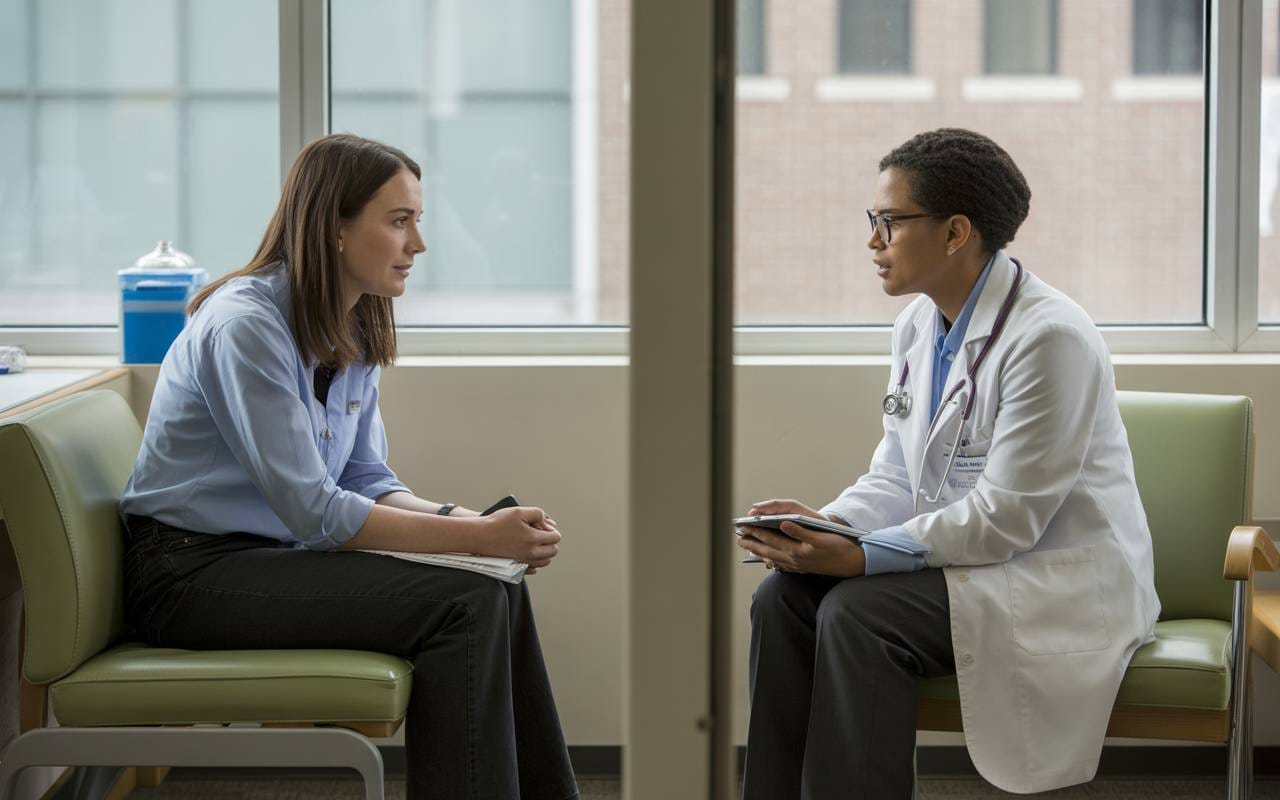
When you head off to college in or near Riverside County, health care probably isn’t the first thing on your mind. But somewhere between your first all-nighter and your first bout of the flu, you’ll ask yourself: Should I go to the campus health center, or do I need a real primary care doctor?
It’s a question more students should ask earlier. The answer could affect not just how quickly you recover from a cold — but whether chronic conditions go unmanaged, whether your medical history follows you into adulthood, and whether you’re prepared for a healthcare system that won’t hold your hand the way pediatric care once did.
This guide breaks down the real differences between college health services and primary care — and explains why students and families in the Inland Empire have a distinct advantage with access to PromiseCare Medical Group’s comprehensive network throughout Riverside County.
Medical Disclaimer: This content is for educational purposes only and should not replace professional medical advice from PromiseCare Medical Group physicians or other qualified healthcare providers. Always consult a PromiseCare physician for personalized medical guidance, diagnosis, and treatment recommendations tailored to your individual health needs.
What Are College Health Services?
Campus health centers have evolved significantly over the past few decades. According to research published in Current Problems in Pediatric and Adolescent Health Care (2024), most college health centers today provide acute care, primary care, vaccines, gynecology services, sexual health services, nutrition counseling, and mental health resources. Some of the larger university clinics even offer subspecialty care in areas like dermatology, sports medicine, and eating disorder treatment.
That’s genuinely impressive — and for minor, time-sensitive problems like a sprained ankle, a strep throat test, or a birth control prescription, a campus clinic can be a fast, low-friction option.
But the picture gets more complicated when you look at what college health centers are designed to do versus what a board-certified primary care physician does every day for patients across a lifetime.
What Is Primary Care?
Primary care is the foundation of your overall health. A primary care physician — whether trained in family medicine, internal medicine, or general practice — serves as your medical home. They know your history. They track changes year over year. They coordinate referrals to specialists. They manage chronic conditions like diabetes, hypertension, and asthma alongside your acute and preventive needs.
The American Academy of Family Physicians describes primary care physicians as doctors who integrate biological, clinical, and behavioral aspects of care across the full spectrum of age — from pediatrics to geriatrics. This longitudinal relationship is something a campus health center, by its very design, cannot replicate.
PromiseCare Medical Group has been building exactly these kinds of long-term, patient-centered relationships across Riverside County for over 30 years, with a network of 60+ primary care physicians, 400+ specialists, and 18 urgent care centers serving communities from Hemet to Temecula to Murrieta.
5 Key Differences: College Health Services vs. Primary Care
1. Continuity of Care
College Health Center: Each time you visit a campus clinic, you may see a different provider. There’s no guarantee the clinician treating you today has reviewed your full medical history, knows your medication sensitivities, or understands the context of your current complaint.
Primary Care at PromiseCare: Your PromiseCare physician builds a longitudinal relationship with you. They review your complete history at every visit, recognize patterns over time, and provide care that grows with you — not just snapshot treatment at a single moment.
Why it matters: Continuity of care is directly linked to better health outcomes, fewer hospitalizations, and earlier detection of serious conditions. For students managing anything beyond a minor acute illness, this distinction is critical.
2. Scope of Services
College Health Center: Campus clinics handle common acute illnesses (colds, infections, minor injuries), basic preventive screenings, vaccinations, and mental health referrals well. A study published in the Journal of American College Health found that 60% of campus health visits were classified as primary care encounters — but many centers refer students to community providers for anything more complex.
Primary Care at PromiseCare: PromiseCare’s network spans internal medicine, family medicine, adult medicine, pediatrics, gynecology, geriatrics, pulmonology, orthopedics, urology, and more. Annual physical exams, medication management, lab testing, chronic disease management, medical weight loss programs, and specialist coordination are all available through a unified, coordinated system.
Why it matters: If you’re managing a condition like asthma, ADHD, a thyroid disorder, or a mental health diagnosis that requires medication management, a campus clinic may refer you out immediately. At PromiseCare, that care happens in-network, with your primary care physician guiding every step.
3. Insurance Coverage and Summer Gaps
College Health Center: Many student health plans and university clinic services are limited to the academic year. According to the American Academy of Family Physicians, many school-offered plans do not provide coverage during summer breaks, potentially leaving students uninsured for months at a time. Additionally, coverage may be geographically restricted — leaving out-of-state students without access to care while attending college.
Primary Care at PromiseCare: PromiseCare works with nearly all insurance plans in the region, including Medicare, Medi-Cal, and most commercial plans. Coverage doesn’t pause between semesters. Under the Affordable Care Act, young adults can remain on a parent’s insurance plan until age 26, and PromiseCare seamlessly accepts most of these plans. Care is continuous — no gaps, no lapses, no scrambling to reestablish care after summer.
Why it matters: A gap in care isn’t just an inconvenience. For students managing prescription medications, chronic conditions, or mental health treatment, losing access to a provider for even a few months can mean serious health setbacks.
4. The Healthcare Transition — A Critical Window
One of the most overlooked aspects of college health is the transition from pediatric to adult care. Research cited by the CDC indicates that only about 15% of young adults aged 18–21 successfully make this healthcare transition. That means the vast majority of college students enter adulthood without a functioning adult primary care relationship.
This gap is real, documented, and dangerous. A study published in Clinical Practice in Pediatric Psychology found that college students reported the most difficulty with health insurance navigation and knowing their family medical history — two things a consistent primary care physician handles for you.
PromiseCare Medical Group is built to receive young adults exactly at this transition point. Their board-certified physicians are experienced with patients entering adult care for the first time, helping establish a complete medical record, coordinating any needed specialist referrals, and providing the kind of healthcare guidance students never received on a campus.
5. Specialist Access and Referral Networks
College Health Center: Campus clinics act as referral agents for specialist care in the local community — but students must then navigate that community network on their own. There’s often no coordinated follow-up, no shared electronic records, and no guarantee the specialist accepts the student’s insurance.
Primary Care at PromiseCare: PromiseCare’s physician network includes David C. Stanford, M.D. (Internal Medicine), Gordon Skeoch, M.D. (Family Practice), Edivina Gonzales, M.D. and Patrick Gonzales, M.D. (Internal Medicine), Sylvia A. Gisi, M.D. (Family Practice), Anoop Maheshwari, M.D. (Pulmonology), and dozens of other specialists across Riverside County locations including Hemet, Temecula, Murrieta, Corona, and Riverside. Specialist referrals happen within the network, records are coordinated, and your primary care physician stays in the loop.
Why it matters: Fragmented care is one of the leading causes of missed diagnoses and treatment delays. PromiseCare’s integrated network eliminates that fragmentation.
When Should a College Student Use the Campus Health Center?
Campus health services absolutely have a place. They’re typically convenient, often free or low-cost, and fast for common acute issues. Consider using your campus clinic for:
- A rapid strep or flu test when you’re sick during finals week
- Routine vaccinations required for campus enrollment
- Sexual health screenings and contraception management
- Mental health crisis intervention and initial counseling
- Minor injuries that don’t require imaging or specialist follow-up
But treat the campus clinic as a triage resource — not a medical home.
When Should a College Student Have a Primary Care Doctor?
You need a primary care physician at PromiseCare if you:
- Have any chronic condition (asthma, diabetes, hypertension, thyroid disease, ADHD, anxiety, depression, etc.)
- Take prescription medications that require ongoing management and refills
- Are transitioning from pediatric care and have no established adult physician
- Have a family history of heart disease, cancer, or other hereditary conditions that require proactive screening
- Want to establish a baseline for your health before problems arise
- Are approaching graduation and need a healthcare home that isn’t tied to your enrollment status
- Live in or near Riverside County during summers, breaks, or after graduation
Why Riverside County Students Choose PromiseCare Medical Group
For students at schools in or around Riverside County — including those attending UC Riverside, Cal Baptist University, or any of the colleges in the Inland Empire region — PromiseCare Medical Group offers something a campus clinic never can: a permanent medical home that grows with you.
PromiseCare has served the Hemet and Riverside County community for over 30 years, earning a reputation for compassionate, patient-centered care. Their physicians know the community, accept most insurance plans, and operate with the understanding that healthcare is a lifelong relationship — not a semester-by-semester convenience.
Key advantages for Riverside County students include:
- 60+ primary care physicians across the network with multiple locations throughout the county
- 400+ specialists for in-network referrals without coordination headaches
- 18 urgent care centers throughout Riverside County for same-day acute care needs
- Coordination with major hospitals in the region for any inpatient or emergency needs
- Free annual wellness visits covered under Medicare and most insurance plans
- Continuity of care that doesn’t pause between academic semesters
- Multilingual care — many PromiseCare physicians speak Spanish and other languages, reflecting the diversity of the Inland Empire community
Tips for College Students Setting Up Primary Care
1. Don’t wait until you’re sick. The best time to establish with a primary care physician is before you need one urgently. Schedule a wellness visit early in the fall semester.
2. Gather your records. Before your first appointment at PromiseCare, collect vaccination records, medication lists, allergy information, and any relevant medical history — especially anything your pediatrician managed.
3. Understand your insurance. Know whether you’re on a parent’s plan (remember: you’re covered until age 26 under the ACA), a school-sponsored plan, or Medi-Cal. PromiseCare works with all major plans. Call 951-390-2840 to verify coverage.
4. Communicate your history clearly. Your new primary care physician needs to understand your full health picture. Be honest about medications, mental health history, substance use, and family medical history.
5. Plan for the transition out of college, too. Graduating students often lose their campus health access and face a healthcare gap at the exact moment life gets busier and stress is highest. Having an established PromiseCare physician eliminates this risk entirely.
Frequently Asked Questions
Can I use PromiseCare if I still have my campus health plan?
Yes. PromiseCare works with most commercial insurance plans. Depending on your specific plan, you may be able to use both — the campus clinic for quick, on-campus needs and PromiseCare for comprehensive primary care and specialist coordination.
What if I’m covered by my parents’ insurance?
Under the Affordable Care Act, you can remain on a parent’s health insurance until age 26, regardless of student enrollment status. PromiseCare accepts most major insurance plans and can verify your coverage before your first appointment.
Does PromiseCare see young adults, or is it mostly for older patients?
PromiseCare’s network includes physicians trained in family medicine and internal medicine who care for patients of all ages. Their scope includes adult medicine, pediatrics, gynecology, and geriatrics — making them an ideal medical home for college-age patients establishing adult care for the first time.
What happens if I need a specialist?
PromiseCare maintains a network of 400+ specialists throughout Riverside County. Your primary care physician will coordinate specialist referrals within the network, ensuring your records, history, and follow-up care remain coordinated.
I’m graduating soon. Will PromiseCare still be my doctor after I leave campus?
Absolutely. PromiseCare’s care isn’t tied to your enrollment status. Your physician relationship continues after graduation, providing the healthcare continuity that campus health services simply cannot offer.
Is there an urgent care option for times when I can’t wait for an appointment?
Yes. PromiseCare maintains close relationships with nearly 20 urgent care centers throughout Riverside County. For same-day acute needs, you can visit an urgent care center and your PromiseCare physician will receive any relevant records for follow-up.
The Bottom Line
College health services are a useful resource for quick, on-campus acute care. But they were never designed to be your long-term medical home — and treating them as one is one of the most common healthcare mistakes college students make.
Establishing a primary care relationship with PromiseCare Medical Group while you’re in Riverside County means you’ll have access to experienced, board-certified physicians, a comprehensive specialist network, continuity of care across semesters and summers, and a medical home that follows you beyond graduation into adulthood.
Your health doesn’t pause for semester breaks. Neither should your care.
Schedule Your Appointment with PromiseCare Medical Group
Ready to establish your primary care home in Riverside County? PromiseCare Medical Group is accepting new patients across multiple locations serving Hemet, Temecula, Murrieta, Corona, Riverside, and surrounding communities.
📞 Call: 951-390-2840
🌐 Visit: promisecare.com
Don’t wait until you’re sick, between semesters, or newly graduated with no doctor to call. Establish care with PromiseCare today — and invest in the one resource that matters most for your college years and beyond: your health.
This content is provided for educational purposes only. It is not intended to diagnose, treat, or replace personalized medical advice from a licensed healthcare provider. If you are experiencing a medical emergency, call 911 or go to your nearest emergency room immediately.