
You can effectively manage stress with five proven techniques designed for your needs. Start with deep breathing to activate your parasympathetic nervous system and lower cortisol levels. Try progressive muscle relaxation by tensing and releasing muscle groups to identify hidden tension. Practice daily meditation to boost emotional resilience and improve sleep quality. Engage in low-impact exercises like tai chi or water aerobics for natural stress reduction. Join group activities such as community gardening or stress management classes to build supportive connections. The following sections explore how each technique works for your unique physiology.
Main Points
- Deep breathing activates the parasympathetic nervous system, lowering cortisol and blood pressure while providing immediate anxiety relief.
- Progressive muscle relaxation systematically tenses and releases muscle groups, reducing stress, headaches, and improving sleep quality.
- Daily meditation calms the mind, reduces cortisol, improves emotional regulation, and enhances cognitive function and sleep.
- Low-impact exercises like walking, tai chi, and water aerobics naturally reduce cortisol through gentle movement.
- Group activities provide mutual support, teach coping strategies, and build social connections that significantly reduce stress.
Deep Breathing to Activate Your Relaxation Response
Deep breathing stands out as one of the most accessible and scientifically backed stress-relief techniques available to seniors. When you practice breath awareness through deep inhalation, you activate your parasympathetic nervous system, directly counteracting your body’s fight-or-flight response.
This simple practice lowers your cortisol levels within minutes, reduces blood pressure, and increases high-frequency heart rate variability—with research showing particularly strong effects in older adults.
Each controlled breath enhances oxygen delivery to your brain and crucial organs while improving circulation and mental clarity.
Controlled breathing delivers oxygen to your brain and vital organs, boosting circulation and sharpening mental clarity with each mindful breath.
You’ll notice decreased anxiety after just one session. Regular practice builds mental resilience, improves sleep quality by quieting racing thoughts, and provides immediate relief during moments of grief, frustration, or worry. Unlike shallow chest breathing that occurs under stress, deep breathing focuses on expanding the belly as you engage your diaphragm with each inhalation.
Progressive Muscle Relaxation to Release Hidden Tension
Progressive muscle relaxation (PMR), developed by American physician Edmund Jacobson in the 1920s, offers seniors a powerful method to identify and release physical tension they didn’t even know they were carrying.
The technique is straightforward: systematically tense specific muscle groups for 5 seconds, then suddenly release for 10-20 seconds. You’ll start with your hands by clenching fists tightly, then progress to feet, legs, torso, and face. Focus on the contrast between tension and relaxation sensations.
This enhanced muscle awareness helps you recognize and release hidden tension throughout your day.
The relaxation benefits include reduced stress, fewer headaches, improved sleep quality, and decreased anxiety. Studies have shown that PMR practice leads to a significant decrease in anxiety among participants.
Practice several times weekly at home. Breathe deeply—inhale during tension, exhale during release—without straining muscles.
End each session with a full-body tense-and-release sequence.
Daily Meditation for Stress Relief and Social Well-Being
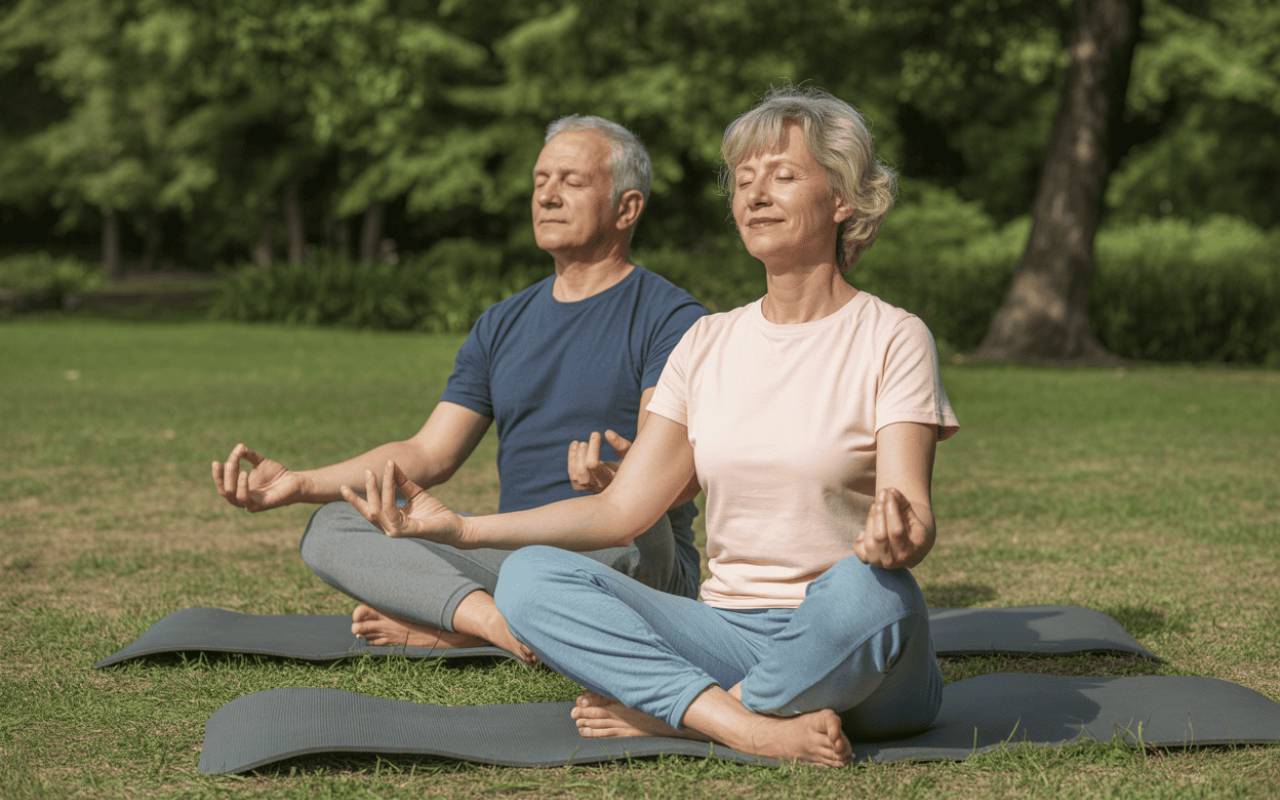
Few practices offer seniors more thorough benefits than daily meditation, which simultaneously calms your mind, strengthens emotional resilience, and deepens your connection with others.
Through mindfulness benefits like reduced cortisol levels and increased endorphin release, you’ll experience genuine stress relief within minutes of focused breathing. Regular practice enhances your emotional regulation, helping you respond compassionately rather than reactively to challenging situations.
Various meditation techniques improve your sleep quality by creating the calm conditions necessary for rest, while reducing insomnia symptoms markedly.
You’ll notice sharper cognitive function and improved memory as mental training reduces age-related decline. Meditation trains your mind through focused attention, mindful observation, and guided visualization to develop heightened awareness.
Beyond personal wellness, meditation fosters meaningful social connections through heightened awareness, directly addressing loneliness while enriching your overall quality of life.
Low-Impact Exercise That Lowers Cortisol Naturally
Your body releases cortisol in response to physical and emotional stress, but gentle movement actually signals your system to produce less of this hormone rather than more.
Water aerobics benefits include building strength without joint strain while reducing exercise-induced stress. Swimming offers similar cardiovascular conditioning without the knee and ankle impact of running.
Tai chi movements combine slow postures with breathing to activate your parasympathetic nervous system, lowering cortisol levels in just 15-20 minutes daily. Yoga may also alleviate chronic pain and stress through controlled breathing and mindful stretching.
Walking for 60 minutes in nature decreases brain stress-processing activity while maintaining a conversational pace.
Cycling on a stationary bike provides low-impact cardio at any fitness level.
Aim for 150-200 minutes weekly of these moderate activities to support natural cortisol reduction and adrenal recovery.
Group Activities That Build Stress Resilience Through Connection
While individual stress-relief practices provide valuable benefits, connecting with others in structured group settings amplifies your resilience through shared experience and mutual support.
Stress management training groups with 5–8 participants create ideal environments for learning coping strategies, resulting in significant cortisol reduction. Programs like “Raise Your Resilience” combine gratitude exercises with discussions on aging perceptions, boosting resilience scores through guided activities.
Community gardening weaves you into supportive networks while working toward achievable goals. This hands-on engagement strengthens personal resilience alongside neighbors who share similar interests.
Volunteering at local shelters provides additional opportunities for meaningful connection.
Your social support network directly impacts stress resilience—frequent positive interactions reduce stress and maintain independence in daily activities. These programs teach techniques like abdominal breathing to help manage emotional responses during stressful moments.
These group experiences build practical skills essential for healthy aging.
Frequently Asked Questions
How Does Proper Hydration Help Seniors Manage Stress and Improve Brain Function?
Proper hydration offers significant hydration benefits for your brain by maintaining the 75% water composition of your brain tissue.
When you’re well-hydrated, you’ll experience improved cognitive function, including better concentration, enhanced memory, and faster reaction times.
Drinking water reduces stress on your brain’s thirst centers, preventing poor concentration and agitation that come with dehydration.
Regular water intake helps you stay alert, focused, and mentally sharp, making daily tasks easier while reducing the fatigue and confusion that increase stress levels.
What Sleep Routines Best Support Stress Reduction in Older Adults?
Like Pavlov’s dogs responding to a bell, you’ll train your body to relax by establishing consistent bedtime rituals.
Go to bed and wake at the same times daily, creating a predictable sleep-wake cycle. Practice progressive muscle relaxation or deep breathing before sleeping.
Optimize your sleep environment by keeping it dark, quiet, and cool. You can also try gentle yoga or meditation to calm racing thoughts and reduce nighttime stress.
Can Stress-Relief Techniques Help Reduce Arthritis Pain in Seniors?
Yes, stress-relief techniques can greatly reduce your arthritis pain through the mind-body connection.
When you practice deep breathing, progressive muscle relaxation, or meditation, you’ll activate your body’s natural pain-relief systems.
Holistic approaches combining gentle exercise like tai chi with cognitive strategies work best.
You’ll find that managing stress through these techniques breaks the cycle where tension worsens pain, providing lasting relief beyond temporary medication effects.
How Long Does It Take to See Cortisol Reduction From Stress Management?
Like flipping a switch, your cortisol response can shift remarkably fast.
You’ll notice stress reduction within 10-20 minutes of nature walks or mindfulness practice during a single session.
Over 8 weeks of consistent effort—just three brief sessions weekly—you’ll experience deeper, lasting changes as your body learns to reset its stress patterns automatically, creating sustainable relief that compounds over time.
Are Brief 10-Minute Exercise Sessions as Effective as Longer Workouts for Stress?
Brief workouts can be surprisingly effective for stress relief in your senior years.
While the evidence shows that programs lasting 3 months to 1 year provide consistent benefits, you don’t need marathon sessions.
Low-intensity exercises like qigong and tai chi prove most effective for stress reduction, and these can be done in shorter intervals.
You’ll find that even 10-minute sessions help lower your stress levels, especially when you’re consistent and choose activities matching your fitness level.
Final Thoughts
You’ve now got five powerful tools in your stress-relief toolkit that’ll transform your daily life. Whether you’re taking deep breaths before breakfast, releasing tension through muscle relaxation, finding your calm in meditation, moving your body with gentle exercise, or connecting with others in group activities, you’re building a fortress against stress. Start with just one technique today, and you’ll discover that managing stress doesn’t have to be complicated—it just takes a little practice and commitment to yourself.